A deep, honest, and complete answer — covering history, mechanics, core concepts, frameworks, quirks, debates, and why JS runs almost everything on the web in 2026.
JavaScript can compute anything that is mathematically computable. Loops, conditionals, recursion, and arbitrary memory access — it passes the gold standard completely.
Functions are values. Assign them, pass them, return them, store them. This enables callbacks, closures, higher-order functions, and full functional programming patterns.
Arrays, Objects, Maps, Sets, WeakMaps, WeakSets, Iterators, Generators, TypedArrays, ArrayBuffers — a comprehensive suite for organizing complex information at scale.
Object-oriented, functional, reactive, imperative — JavaScript doesn't force one approach. Use the paradigm that fits your problem without fighting the language.
if/else, switch, for, while, do-while, for-of, for-in, try/catch/finally, break, continue — every control flow construct a general-purpose language needs.
Classes, modules, closures, prototypes, iterators, generators, decorators (ES2026) — multiple levels of abstraction from utility functions to enterprise architectures.
When JavaScript was named a "scripting language" in 1995, the term simply meant: a language that runs inside a host environment and automates tasks within it. It was neutral — the same way Bash is a "scripting language" for Unix, or Lua for game engines. The confusion arose because early JavaScript (1995–2007) was genuinely limited. People confused the limitations of the early implementation with a permanent ceiling on the language. That ceiling was shattered long ago.
Infinite loops, arbitrary branching, recursion, memory manipulation — JS passes definitively.
while(true){} // ✓ECMAScript (ECMA-262) — a 900-page formal spec maintained by TC39. More formal than most languages.
ECMA-262 / ES2026Arrays, Maps, Sets, WeakMaps, TypedArrays, Promises, Iterators — richer stdlib than many "serious" languages.
Map, Set, WeakRef, Symbolif/else, switch, for-of, for-in, try/catch/finally, break/continue — every construct required.
try { } catch(e) { } finally { }Private fields (#field), closures, modules, Proxies, Symbols — rich mechanisms at every level.
class Foo { #private = 42; }Full filesystem, network sockets, child processes, streams, crypto, OS signals via Node.js.
fs, net, crypto, process, fetchStorable, passable, returnable, composable. Enables the entire React model.
const fn = () => {}; arr.map(fn);ES Modules — statically-analyzable, tree-shakeable, standards-compliant. Native in all runtimes.
import { fn } from './module.js'Promises, async/await, Worker Threads, SharedArrayBuffer, Atomics, Event Loop.
async/await + Worker Threads"Scripting languages aren't compiled — they're just interpreted line by line, making them slow and unserious."
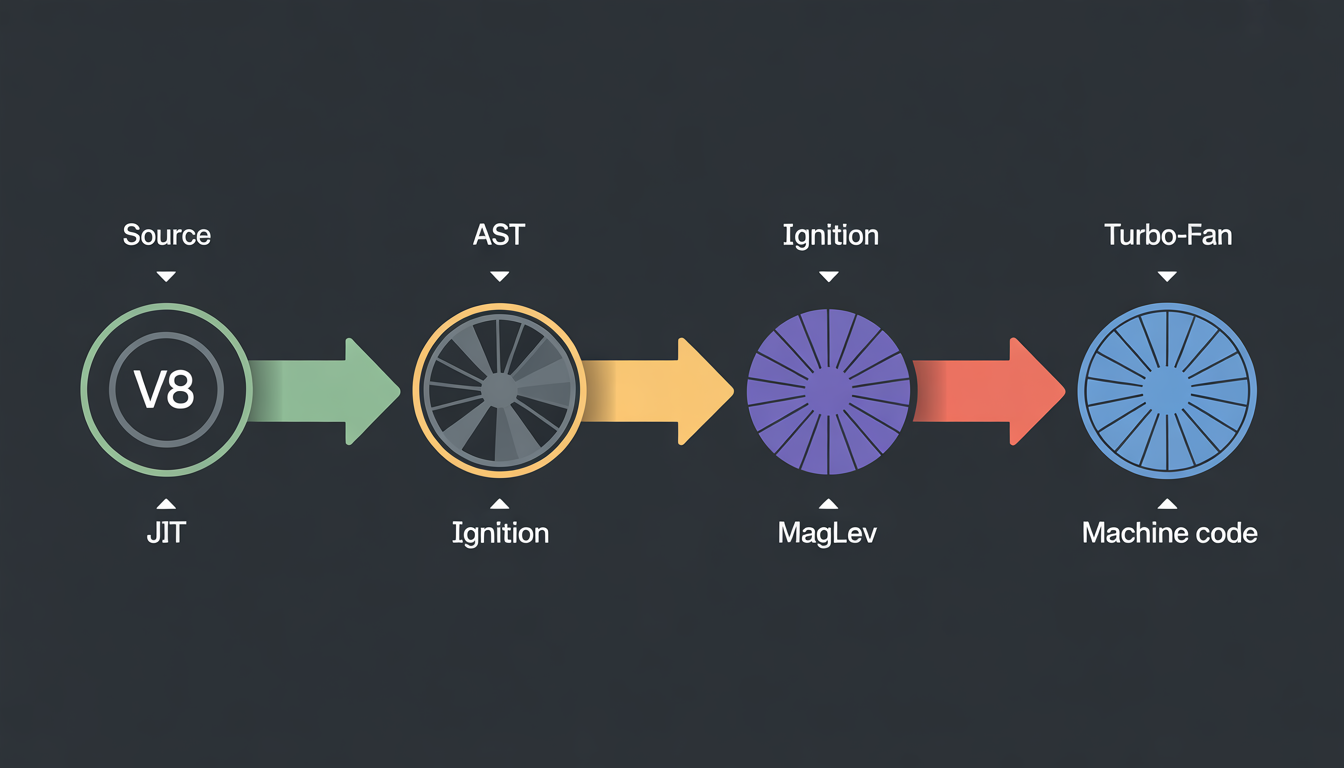
Modern JS engines use multi-tier JIT compilation. V8 uses Ignition → Maglev → TurboFan. Hot code paths are compiled to optimized native machine code. JS benchmarks routinely beat PHP, Ruby, and Python.
"JavaScript can only run in a browser — it's not a standalone language."
JavaScript runs completely outside the browser via Node.js (2009), Deno (2018), and Bun (2022) — standalone runtimes just like Python's interpreter or Ruby's MRI.
"JavaScript doesn't have types — real languages have type systems."
JavaScript has a type system — it is dynamically typed, which is a design choice. Python, Ruby, Lisp, Erlang are all dynamically typed. TypeScript adds a world-class static type system on top.
"JavaScript can't build real software — only websites and small scripts."
VS Code is JavaScript/TypeScript. Slack, Discord, WhatsApp Desktop, Figma are Electron apps. LinkedIn, Uber, Netflix, Airbnb, PayPal run Node.js on their backends.
"JavaScript doesn't have proper OOP — no real classes, no encapsulation."
ES6+ has full class syntax with constructors, inheritance, static methods. ES2022 added private class fields (#field) for true encapsulation. ES2026 adds decorators.
Academically, a "scripting language" runs inside a host environment rather than directly on hardware, is typically JIT-compiled, and is designed to control a host application. By this definition, JavaScript qualifies.
But this definition describes a deployment model, not a capability ceiling. The host environment provides the runtime — the language itself determines what you can build.
C runs "inside" operating systems. Java runs "inside" the JVM. Python runs "inside" its interpreter. The host-environment definition breaks down immediately when applied consistently.
The scripting/programming distinction is a historical artifact of 1990s computing culture — when scripting meant shell scripts and programming meant compiled system code.
JavaScript runs standalone server processes, compiles to native code via JIT, powers OS-level tooling, and executes machine learning inference — none of which are "scripting" activities.
Calling modern JavaScript a "scripting language" is like calling a commercial aircraft a "glider." Technically related by lineage; completely different in reality.
// ─── JavaScript doing things "scripting languages" supposedly can't ─── // 1. SYSTEMS-LEVEL: OS signals import process from 'node:process'; process.on('SIGTERM', () => console.log('Graceful shutdown')); // 2. NETWORKING: Raw TCP socket server import net from 'node:net'; net.createServer(s => s.pipe(s)).listen(3000); // 3. CRYPTO: RSA key generation import { generateKeyPairSync } from 'node:crypto'; const { privateKey } = generateKeyPairSync('rsa', { modulusLength: 4096 }); // 4. CONCURRENCY: True multi-threading import { Worker, isMainThread } from 'node:worker_threads'; if (isMainThread) new Worker(import.meta.url); // 5. MACHINE LEARNING: Inference in pure JavaScript import * as tf from '@tensorflow/tfjs-node'; const model = await tf.loadLayersModel('file://./model/model.json'); // → ML inference in Node.js. No Python required.
It started as a scripting language for browsers. It grew into a general-purpose programming language. "Scripting language" describes its origin, not its nature. The debate was settled not by argument, but by the billions of lines of JavaScript powering the modern world.
The engine tokenizes source text into tokens, then converts them into an AST — a hierarchical data structure representing the code's grammatical structure.
Tools like Babel, ESLint, Prettier, and TypeScript all work by parsing JS into an AST and analyzing or transforming it.
V8 uses a multi-tiered JIT pipeline: Ignition (bytecode) → Maglev (mid-tier JIT) → TurboFan (optimizing JIT). Hot code paths are compiled to native machine code.
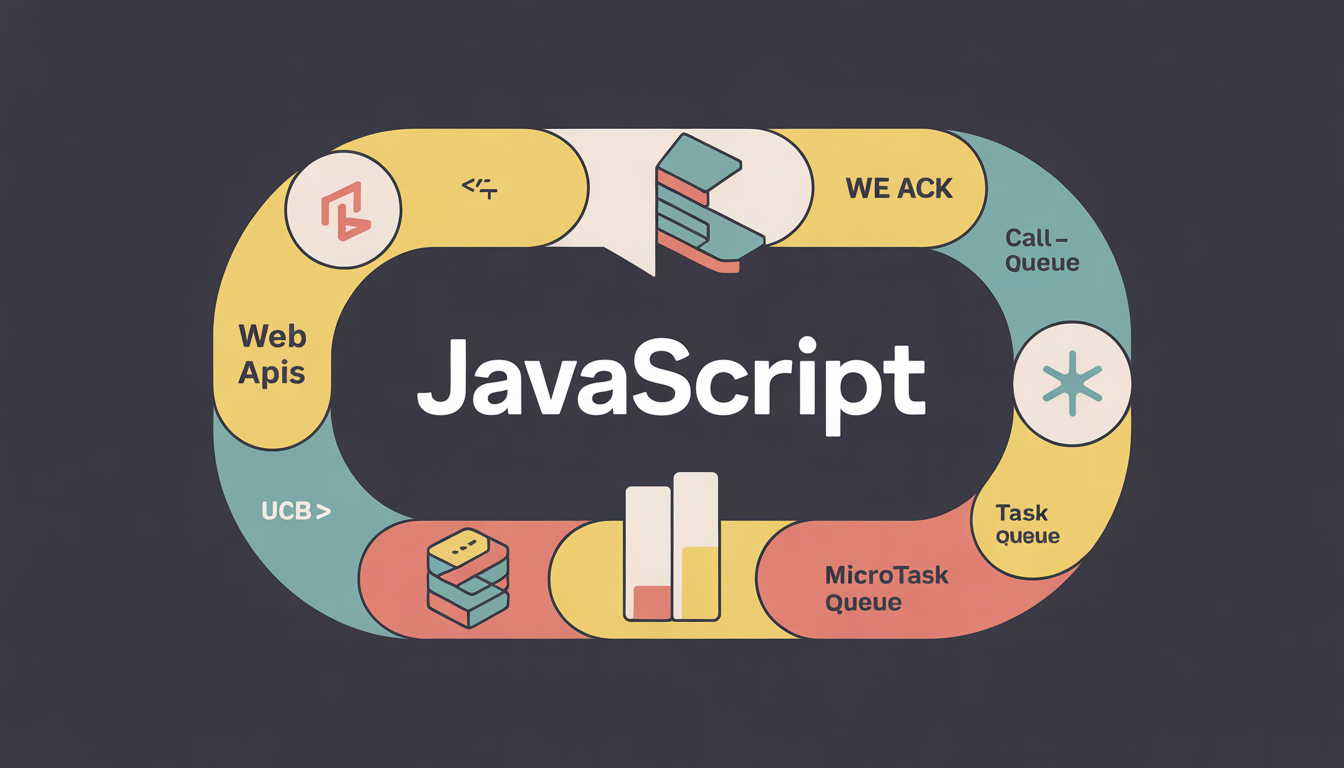
One call stack, but thousands of concurrent operations via the Event Loop. Async operations go to Web APIs / libuv, completing callbacks join the Task Queue or Microtask Queue.
Every function call creates an Execution Context with its own variable environment, scope chain, and this binding. var is hoisted and initialized to undefined; let/const enter the Temporal Dead Zone.
V8 uses generational GC — fast "minor GC" for short-lived objects, slower "major GC" for long-lived ones. Common leaks: uncleared timers, forgotten event listeners, accidental globals.
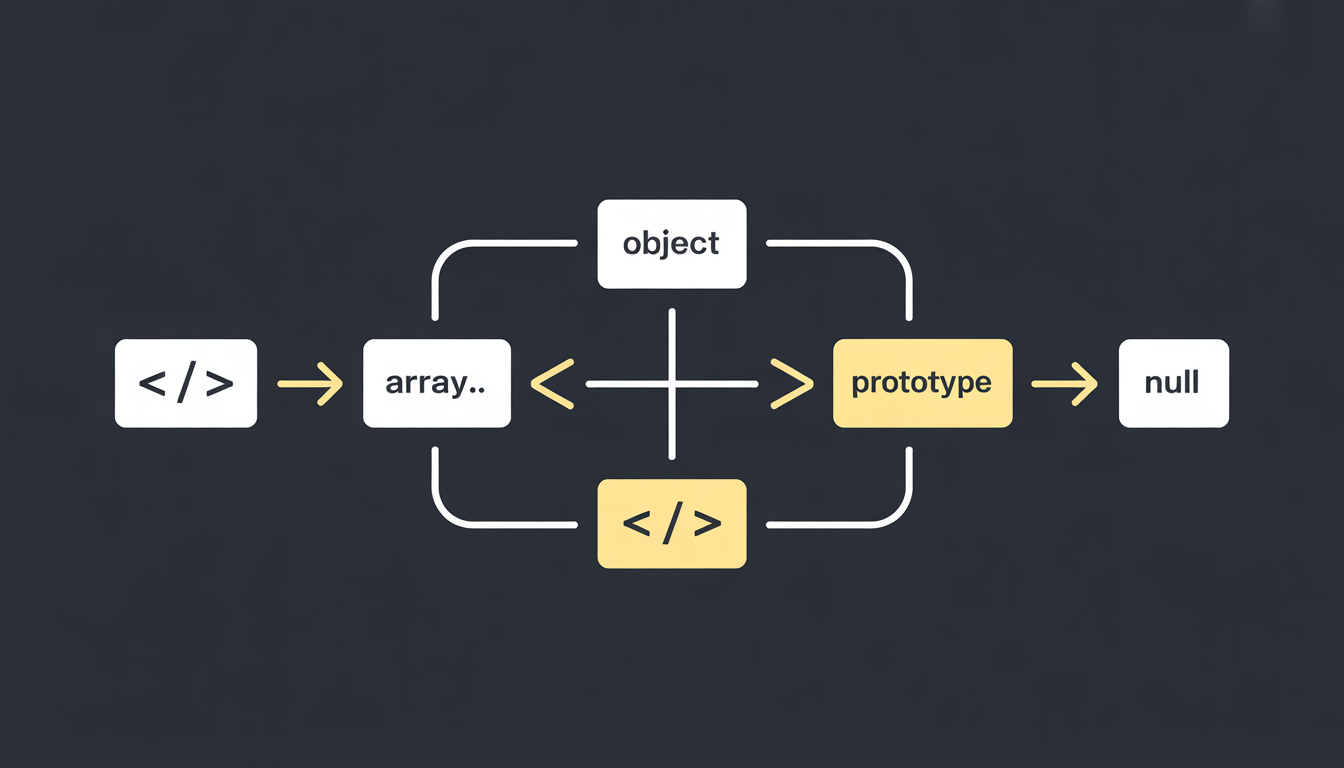
Every object has an internal [[Prototype]] link. Property lookup walks the chain until null. ES6 class syntax is syntactic sugar — prototypes remain the underlying mechanism.
// Event Loop execution order console.log('1: Script starts'); setTimeout(() => console.log('4: Macro task'), 0); Promise.resolve().then(() => console.log('3: Microtask')); queueMicrotask(() => console.log('3b: Also microtask')); console.log('2: Script ends'); // Output: 1 → 2 → 3 → 3b → 4 // Microtasks ALWAYS run before Macro tasks function makeCounter(start = 0) { let count = start; return { increment: () => ++count, value: () => count }; } const counter = makeCounter(10); counter.increment(); counter.increment(); console.log(counter.value()); // 12
Variables are untyped containers — they can hold any value, change type at runtime legally. Speeds up prototyping; TypeScript adds optional compile-time type safety.
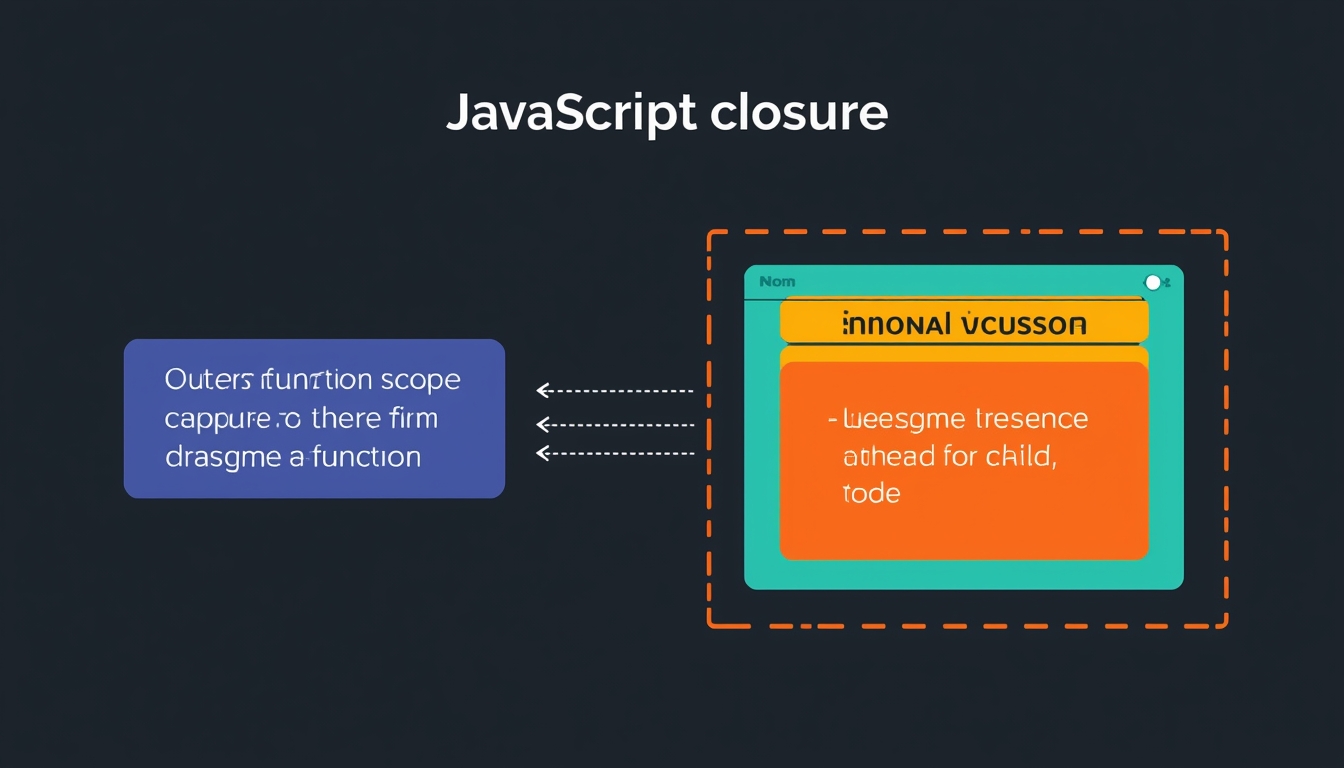
typeof "hello" // "string"A function that retains access to its outer scope's variables even after the outer function has returned — the foundation of React hooks, module patterns, and memoization.
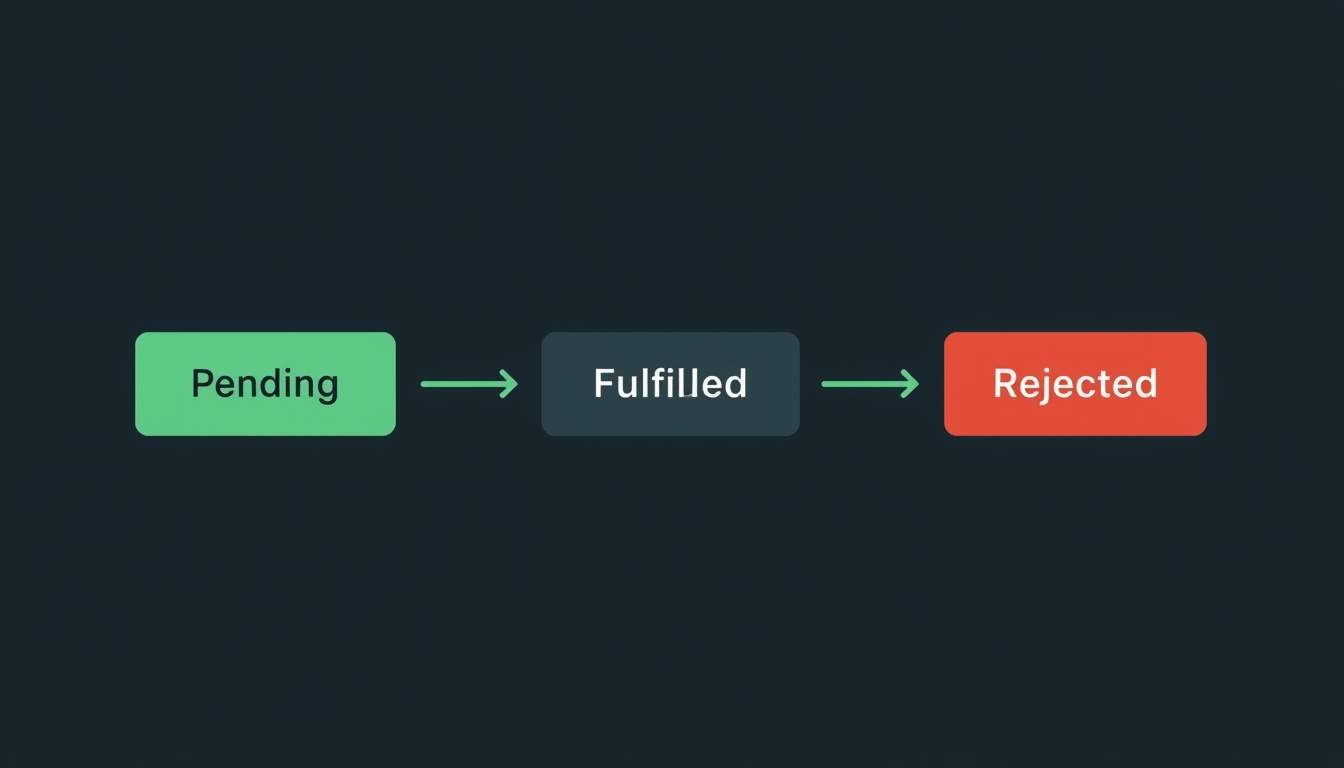
inner fn + outer scope = closurePromises represent future values. async/await is syntactic sugar that makes async code read synchronously. Every async function returns a Promise under the hood.
async fn + await = clean asyncObjects inherit from other objects via a [[Prototype]] link. ES6 class syntax is clean sugar over this. Understanding prototypes explains instanceof, Array.prototype methods, and more.
obj → proto → Object.prototype → nullCode responds to events rather than running sequentially. Click, scroll, network response, WebSocket message — all trigger callbacks through the Event Loop.
el.addEventListener('click', fn)import/export gives JS statically-analyzable, tree-shakeable modules — enabling bundlers to eliminate unused code. Now the standard in browsers, Node.js, Bun, Deno, and Cloudflare Workers.
import { fn } from './module.js'function* functions can be paused and resumed, yielding values one at a time. Enables lazy evaluation, infinite sequences, and elegant async control flow.
function* gen() { yield 1; yield 2; }Intercept fundamental object operations — property access, assignment, deletion, invocation. Vue 3's entire reactivity system is proxy-based.
new Proxy(target, { get, set })// ── ES2026 Features ── // Decorators (ES2026) class Config { @readonly API_URL = 'https://api.example.com'; } // Explicit Resource Management function processFile(path) { using handle = openFile(path); // auto-closed on scope exit return handle.read(); } // Iterator Helpers — lazy operations const result = [1,2,3,4,5].values() .filter(x => x % 2 === 0) .map(x => x * 10) .toArray(); // [20, 40] // Object.groupBy (ES2026) const byDept = Object.groupBy(people, p => p.dept);
Created by Meta in 2013. Pioneered component-based UI. Virtual DOM diffing and unidirectional data flow became industry standards.
Created by Evan You in 2014. Celebrated for gentle learning curve and progressive nature — add it with a script tag or build a full SPA.
Google's Angular is opinionated and batteries-included — routing, forms, HTTP client, DI, testing, CLI all built in. TypeScript-first by design.
Svelte is a compiler — it compiles components to vanilla JavaScript at build time, generating minimal output with no virtual DOM overhead.
The de facto standard for production React apps. App Router (React Server Components), code splitting, image optimization, zero-config TypeScript.
Minimalist, un-opinionated Node.js web framework. Over a billion npm downloads. The foundational layer for HTTP servers, REST APIs, middleware chains.
The original JS server runtime. Node 22: native fetch, --watch mode, native test runner, improved ESM. Most mature, best-documented runtime.
All-in-one runtime, bundler, test runner, package manager — built in Zig. 4× faster than Node.js, 25× faster installs, native TypeScript and JSX.
Native TypeScript, permission sandbox (no file/network by default), built-in stdlib, JSR registry. Deno 2 added Node.js compatibility.
V8 Isolates at 300+ global edge locations. Sub-millisecond cold starts, no containers. Web Platform API surface (fetch, KV, R2, Durable Objects).
V8 (Chrome/Edge), SpiderMonkey (Firefox), JavaScriptCore (Safari). All support ES2026, WebAssembly, Service Workers, WebGPU, and the full Web API surface.
Serverless JS execution — scale from zero to millions with no infrastructure management. Vercel Edge uses V8 Isolates for faster cold starts.
0 == false is true; typeof null is "object". Warts exist.| Language | Type System | Primary Use | Performance | Learning Curve | Front-End | Back-End | Best For | Survey Rank |
|---|---|---|---|---|---|---|---|---|
| Dynamic | Web · Full-Stack | Fast (JIT) | Easy | ✅ Native | ✅ Node / Bun | Universal web apps, APIs, real-time | #1 | |
| Static (opt) | Web · Full-Stack | Fast (JIT) | Medium | ✅ Native | ✅ Node / Bun | Large codebases, teams, enterprise | #5 | |
| Dynamic | AI · Data · Scripts | Medium | Easy | ❌ Limited | ✅ Django/Flask | ML/AI, data science, scripting | #2 | |
| Static | Enterprise · Android | Fast (JVM) | Hard | ❌ No | ✅ Spring Boot | Enterprise backends, Android | #3 | |
| Static | Systems · WASM | Fastest | Very Hard | ⚠️ Via WASM | ✅ Yes | Systems, game engines, CLI, WASM | #14 | |
| Static | Backend · APIs · DevOps | Fast | Medium | ❌ No | ✅ Native | APIs, microservices, cloud infra | #8 | |
| Static | iOS · macOS | Fast | Medium | ❌ No | ⚠️ Limited | Native iOS, macOS, tvOS | #17 | |
| Dynamic | Web · CMS | Medium | Easy | ❌ No | ✅ Laravel | Content sites, WordPress, legacy | #6 |
SPAs, dashboards, e-commerce platforms, social networks — the core JS use case. React, Vue, or Angular + API is the most common modern architecture.
REST APIs, GraphQL, WebSocket backends, microservices. Node.js and Bun power some of the highest-traffic APIs.
Cross-platform iOS and Android with one codebase. React Native renders real native UI components.
Electron packages web apps as native desktop apps. Tauri offers dramatically smaller file sizes using Rust as backend.
TensorFlow.js and ONNX.js run ML inference in the browser or Node.js. LLM API clients and AI-powered UIs are increasingly JavaScript-first.
Cloudflare Workers, Vercel Edge Functions, AWS Lambda — milliseconds from users globally with zero infrastructure management.
Vite, ESLint, Prettier, Vitest, TypeScript compiler — the JS toolchain runs on JavaScript itself.
Browser games, WebGL graphics, physics simulations, interactive data visualizations, and canvas animations.
Espruino runs JS on ARM Cortex-M chips. Johnny-Five controls Arduino hardware via Node.js. JS everywhere, literally.
Playwright and Puppeteer automate real browser interactions. Jest and Vitest cover unit and integration testing.
Before any framework, understand JS deeply. Variables, types, functions, scope, closures, Event Loop, Promises, ES6+. Frameworks are abstractions — know the language first.
React is the industry standard and safest career bet. Component thinking and state management transfer to any framework.
Industry standard for professional JS development. Catches bugs at compile time, vastly improves IDE autocompletion, makes large codebases safer to refactor.
Write servers, APIs, CLI tools, and scripts in the same language. Build a REST API with Express, connect to PostgreSQL via Prisma, and deploy it.
Is it a real programming language? Yes — completely, unambiguously, and impressively so. Born in a 10-day sprint in 1995, JavaScript has grown into the most widely used programming language on earth. Its quirks are real but learnable. Its ecosystem is unmatched. Its reach is unique. Whatever you want to build on or for the web, JavaScript — and its typed sibling TypeScript — will take you there.